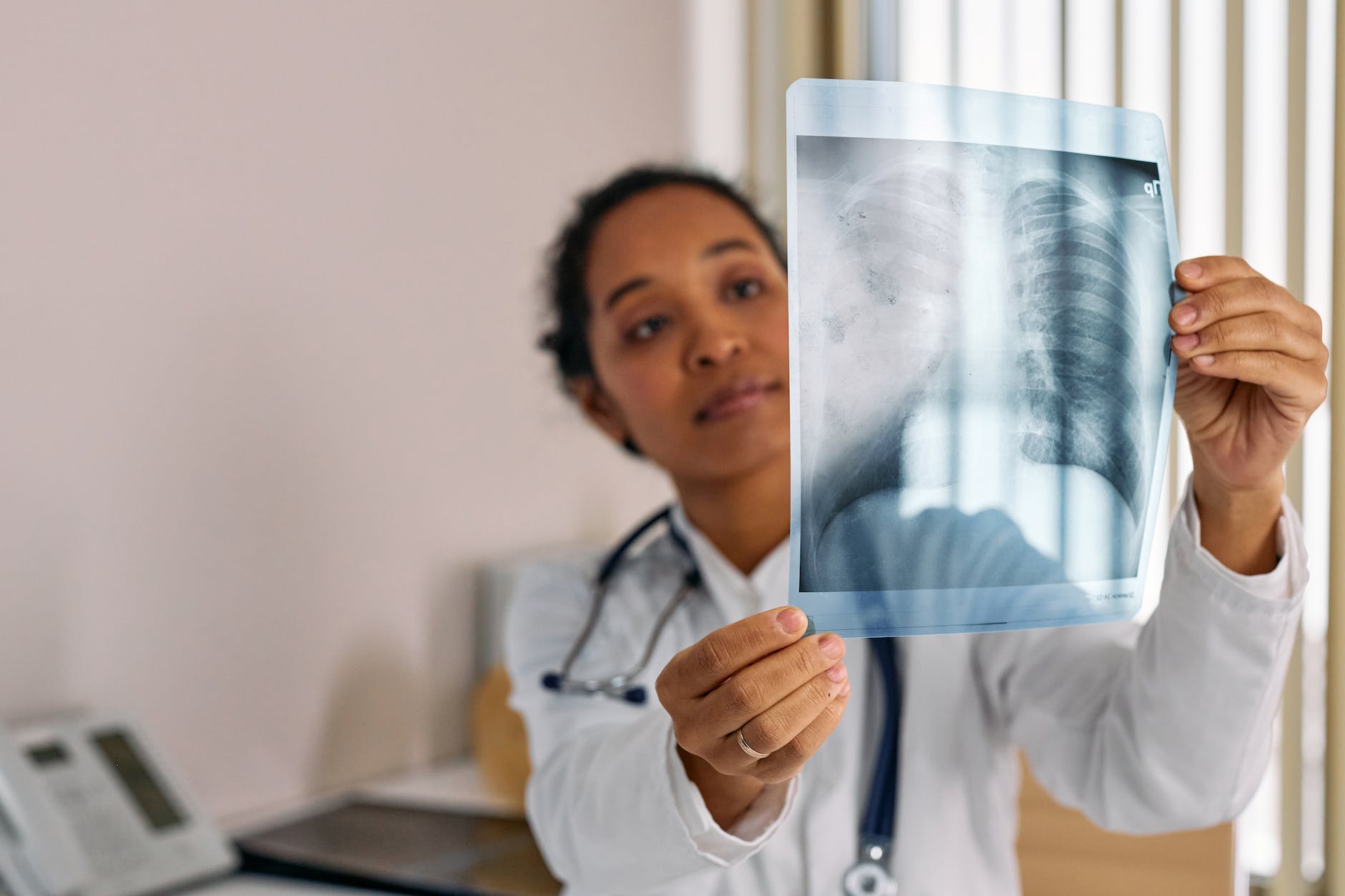
Whether you are a medical interpreting student preparing for medical interpreter certification exams or a working medical interpreter looking for a quick refresher on the respiratory system in order to prepare for an interpreting assignment, this collection of resources on respiratory health and respiratory diseases is here to help. Alternatively, you can skip to the end of the article where you’ll find some videos with medical dialogues to help you keep your interpreting skills sharp.

In this post, I put together resources related to anatomy of the respiratory system, as well as diagnosis and treatment of respiratory conditions and diseases. As you are reading, wathching and listening to various sources in this article, you could:
- Engage in terminology mining – that it, finding words and phrases that are new to you or that might be familiar to you in English, but need to be look up in your working language(s). Just remember to add the new terminology you learn along the way to your personal glossary!
- Practice simultanious and consecutive interpreting skills – whether it’s shadowing or note-taking.
Respiratory System: Anatomy and Physiology
Let’s start with basics: the anatomy and physiology. As a medical interpreter, this section will help you in several ways. Firstly, background knowledge and understanding of the respratory system inner workings will promote accuracy in your interpreting. Secondly, when explaining diagnoses and treatment plans, providers often desctibe relevant anatomy and physiology – so by learning this termonology in English and your working language(s), you will be able to interpet in such appointements with full confidence!
- The lungs and pulmonary system lesson from Khan Academy
- Crash Course videos on Respiratory System, Part 1 and Part 2 – and they also come with flash cards to help you review. The cards can be found on the free Crash Course app (Apple Devices and Android Devices)
- Breathtaking Lungs: Their Function and Anatomy – a very detailed and clear explanation of how we breathe. There are more links below the main text for articles devoted to a more detailed look at specific parts of the respiratory system such as pulmonary trunk and various sections of the lungs.
- Respiratory system (pulmonary system) anatomy – a detialed explanation wiht helpful diagrams.
Medical providers in pulmonary and respiratory care
- Day in the Life – Pulmonary Critical Care Doctor. Follow Dr. Jamie Rutland, an attending pulmonary critical care physician in Southern California throughout his day.
- Inside the world of Pulmonology. Ever wonder exactly what a pulmonologist does on a daily basis? Wonder what a chest xray actually is? Find out on this episode of Medicine Deconstructed.
- A Day in the Life of a Respiratory Therapist. Here’s a closer look at the work respiratory therapists perform in critical illness recovery hospitals across the country.
- Mayo Clinic Q&A podcast: Respiratory therapists play critical role in treating COVID-19 patients. Dr. Daniel Diedrich, a Mayo Clinic anesthesiologist and critical care physician, discusses the role of the respiratory therapist from the time a patient presents with COVID-19 all the way through that patient’s discharge.
- Good Respiratory Therapist Bad Respiratory Therapist. In this podcast espisode, the hosts discuss respiratory therapists and how much nurses rely on them for their knowledge and expertise of the respiratory system. They will tell the story of a “bad respiratory therapist” who was accused of an unspeakable crime against his wife. They close out the show with a good respiratory therapist who has saved lives with CPR in the community on two separate occasions!
- What to Expect from a Visit with a Sleep Specialist
Respiratory System Procedures, Tests and Treatments
From pulmonary function test to sleep study, be ready to interpret in any of these appointments!
- Lung Procedures, Tests & Treatments from the American Lung Association (a list with short descriptions)
- Common lung diagnostic tests from WebMD
- Sleep Study: What to Expect | IU Health (video)
- How A Pulmonary FunctionTest Works (video)
- Read about Tracheostomy: A tracheostomy provides an air passage to help you breathe when the usual route for breathing is somehow blocked or reduced
- Communicating with tracheostomy patients (video)
- Pulmonary Rehabilitation | Nucleus Health (video)
- Pneumonia | Discharge Instructions | Nucleus Health (video)
- Asthma Discharge Education for parents (video)
- Potential Cure For Chronic Cough (video)
Respiratory System Disorders, Conditions and Diseases
- Lung Diseases from MedlinePlus – lots and lots of useful resources and links.
- COVID-19 RESOURCES from Certification Commission for Healthcare Interpreters (CCHI) – from multilingual glossaries to webinar recordings, it’s a treasure trove of information.
- Lung Disease Lookup from the American Lung Association (cards with names and brief description of each disease with links to read more)
- What Do You Want to Know About Asthma? a detailed article from Healthline
- Understanding COPD (video)
- Interstitial Lung Disease (video)
- Understanding Obstructive Sleep Apnea (video)
- Tuberculosis: symptoms, tests and treatment from Healthine
- What do I do if I have a lung nodule? (video)
- Cystic Fibrosis: what it is and what to expect from a hospital visit (video)
- Life With Pulmonary Fibrosis | What is Pulmonary Fibrosis? (video)
Translated Materials
Check each link for the languages avaialble, examples of language translations are Arabic, Bosnian, Chinese, French, Hindi, Japanese, Korean, Portuguese, Russian, Somali, Spanish, Tagalog, Vietnamese
- Bronchoscopy
- Chest X-Ray
- Collecting Sputum
- Sleep study
- Tuberculosis (TB)
- Pneumonia
- Lung Cancer
- Chronic Obstructive Pulmonary Disease (COPD)
- Bronchitis
- Asthma
Interpreting Practice Dialogues and Role-Plays
- Medical dialogue – a provider interviews a patient complaining of Breathlessness
- Consecutive Interpreting Practice (EN to EN): I Think I have Coronavirus! – one of the many videos created and recorded by Kelly Grzech Henriquez
- Medical dialogue – Respiratory examination
- Incentive Spirometer demonstration for pre-op patient
- Discussing surgery complications (thracheostomy) with a family member. The dialogues are broken up by instructions on delivering bad news (aimed at medical students) so just skip those.
- Doctor discusses his own symptoms and ultrasound while being sick with COVID-10
- Idiopathic pulmonary fibrosis: What’s the cause of my cough? Two patients are interviewed about how IPF and coughing have affected their daily lives.
Featured image: Image by macrovector on Freepik
✨ New! I just launched two self-paced CEU courses, accredited for CEUs by CCHI, NBCMI/IMIA and WA DSHS. Learn more and register here!
✉️ Want to get in touch? Contact me
👉 More from the Medical Interpreter Blog:
- For book recommendations for medical interpreters, click here.
- For podcast recommendations for medical interpreters, see here.
- For recommendations of TV shows for medical interpreters, click here.
- To learn about self-care for medical interpreters, click here.
- To learn about what compassion means for medical interpreters, click here.
- For resources related to idioms for medical idioms click here and here.
- For a collection of practice resources for medical interpreters, click here.
- For resources related to note-taking, click here.
- For practice activities for developing your note-taking skills, click here.
- For ideas on glossary building, click here.
- For recommendations for Russian-language podcasts and books click here and here.
- For resources related to interpreting in mental health setting, click here.
- For emergency room interpreting: essential knowledge and preparedness, click here.
- To learn about interpreting in spiritual care encounters, click here.
- For a collection of resources related to virology, click here.
- For resources related to cancer care, click here.
- To learn about interpreting humor and jokes, click here.
- To learn about other interpreter blogs, podcasts etc., click here.
- To learn about pre-session for medical interpreters, click here.
🙋♀️ More about the author: About Yuliya Speroff


Leave a Reply